Variants

ATI Twin Wonder digital TV tuner card
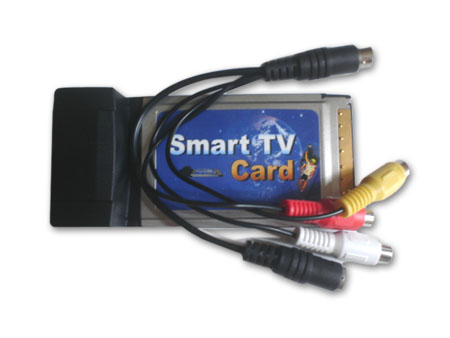
The interfaces for TV tuner cards are most commonly either PCI bus expansion card or the newer PCI Express (PCIe) bus for many modern cards, but PCMCIA, ExpressCard, or USB devices also exist. In addition, some video cards double as TV tuners, notably the ATI All-In-Wonder series. The card contains a tuner and an analog-to-digital converter
(collectively known as the analog front end) along with demodulation
and interface logic. Some lower-end cards lack an onboard processor and,
like a Winmodem, rely on the system's CPU for demodulation.
There are currently four kinds of tuner card on the market:
[edit] Analog TV tuners
Analog television
cards output a raw video stream, suitable for real-time viewing but
ideally requiring some sort of compression if it is to be recorded. More
advanced TV tuners encode the signal to Motion JPEG or MPEG, relieving the main CPU of this load. Some cards also have analog input (composite video or S-Video) and many also provide FM radio.
[edit] Hybrid tuners
A hybrid tuner has one tuner that can be configured to act as an
analog tuner or a digital tuner. Switching between the systems is fairly
easy, but cannot be done immediately. The card operates as a digital
tuner or an analog tuner until reconfigured.
[edit] Combo tuners
This is similar to a hybrid tuner, except there are two separate
tuners on the card. One can watch analog while recording digital, or
vice versa. The card operates as an analog tuner and a digital tuner
simultaneously. The advantages over two separate cards are cost and
utilization of expansion slots in the computer. As many regions around
the world convert from analog to digital broadcasts, these tuners are
gaining popularity.
Like the analog cards, the Hybrid and Combo tuners can have
specialized chips on the tuner card to perform the encoding, or leave
this task to the CPU. The tuner cards with this 'hardware encoding' are
generally thought of as being higher quality.[citation needed]
Small USB tuner sticks have become more popular in 2006 and 2007 and
are expected to increase in popularity. These small tuners generally do
not have hardware encoding due to size and heat constraints.
While most TV tuners are limited to the radio frequencies and video formats used in the country of sale, many TV tuners used in computers use DSP, so a firmware upgrade is often all that's necessary to change the supported video format. Many newer TV tuners have flash memory
big enough to hold the firmware sets for decoding several different
video formats, making it possible to use the tuner in many countries
without having to flash the firmware. However, while it is generally
possible to flash a card from one analog format to another due to the
similarities, it is generally not possible to flash a card from one
digital format to another due to differences in decode logic necessary.
Many TV tuners can function as FM radios;
this is because there are similarities between broadcast television and
FM radio. The FM radio spectrum is close to (or even inside) that used
by VHF terrestrial TV broadcasts. And many broadcast television systems around the world use FM audio. So listening to an FM radio station is simply a case of configuring existing hardware.OK